
A technically perfect photograph is not automatically a useful social media photograph.
For a local business, the image has a job to do. It needs to show something clearly, feel believable and fit naturally into the rest of the social feed.
When we photograph businesses for social media, we are thinking about how the image will be used before we press the shutter. A website hero, an Instagram post, a Story and a Facebook advert may all need slightly different compositions.
The subject needs to be obvious
A good social photo should make sense quickly.
If the post is about a particular dish, treatment, product or service, that should be the obvious focus of the image. Too much background clutter can weaken the photograph even if the lighting is good.
We normally ask one simple question: what should somebody notice first?
If the answer is unclear, the photograph probably needs simplifying.
Natural usually works better than over-staged
Businesses sometimes assume professional photography has to look heavily staged. For social media, we often want the opposite.
A chef working, a barber finishing a cut, a trainer speaking to a client or a member of staff serving a customer can feel more convincing than asking everyone to stop and pose for the camera.
We still control the light, angle and composition, but the moment itself should feel like something that genuinely happens in the business.
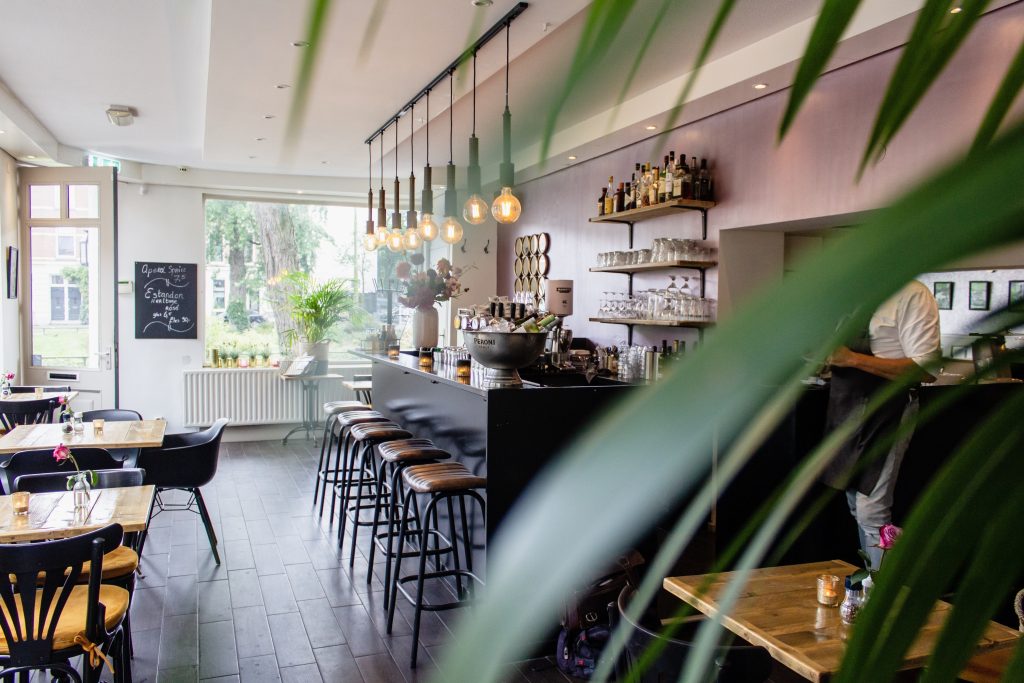
Show the environment, not just close-ups
Close-up photography is useful, but a whole feed made from tight detail shots can hide the actual business.
We normally collect a mixture of:
- Wide images showing the space.
- Mid-range images showing people working.
- Close details of products, food or equipment.
- Vertical images that can work in Stories or Reels covers.
- Horizontal images that may work on websites and Facebook.
That gives the business much more flexibility when content is planned later.
Good light matters more than expensive equipment
Camera equipment helps, but light has a bigger impact on how professional an image feels.
Mixed lighting can be particularly difficult inside restaurants, salons and shops. Warm ceiling lights, daylight from a window and coloured decorative lights can all hit the subject at once.
Where possible, we simplify the lighting rather than trying to fix everything afterwards. That may mean moving a product closer to a window, turning off one source of light or adding controlled light where it is needed.
The aim is not to make the business look artificial. It is to make the subject look clean and intentional.
Leave room for the platform
An image can look great on a camera screen and still be awkward to use on social media.
Instagram feed posts, Stories, Reels covers and website banners all crop images differently. If the subject is pushed too close to the edge, important parts can disappear when the image is resized.
During a content shoot, we normally capture enough space around key subjects so the same photograph has several possible uses.
People make service businesses easier to understand
For service businesses, showing the process is often more useful than photographing an empty room.
A gym with nobody training, a salon with empty chairs or a restaurant with empty tables may be technically tidy, but it does not show what the business actually does.
Adding people creates context. Somebody can see the service being delivered rather than having to imagine it.
The images should look like they belong to the same business
Consistency matters, but that does not mean every photograph should have exactly the same angle or edit.
We look for consistency in overall brightness, contrast, colour and feel. If one image is very warm and dark, the next is cool and bright and the next is heavily filtered, the feed can feel disconnected.
A recognisable visual style makes the account look more considered without making it repetitive.
Do not over-edit the product
For food, beauty, retail and other product-led businesses, the photograph still needs to resemble what the customer will actually receive.
We will clean up distractions, balance colour and make the image look its best, but we do not want to create something that feels completely different from the real product.
Trust matters more than making every image look unrealistically perfect.
Take photos with captions in mind
Photography becomes much more useful when it is connected to the content plan.
If we know a business needs posts about a new service, an offer, a staff introduction and a particular product, we can deliberately capture those things during the shoot.
That is much better than taking 200 random photographs and trying to invent posts afterwards.
How many usable images should a business aim for?
There is no fixed number because the type of business matters, but we normally care more about variety than the total number of files delivered.
Twenty genuinely different, useful images can support a content plan better than sixty near-identical frames of the same product.
For an ongoing monthly social plan, we want enough photography to support several weeks of posts while leaving room for current phone content, offers and video.
A good social media photo has a purpose
The strongest business photography is not just attractive. It helps somebody understand the business.
It may show what a product looks like, what happens during a service, who works there or what visiting feels like.
That is what we look for on a content shoot. The image should be strong enough to stop somebody scrolling, but clear enough to tell them something useful at the same time.